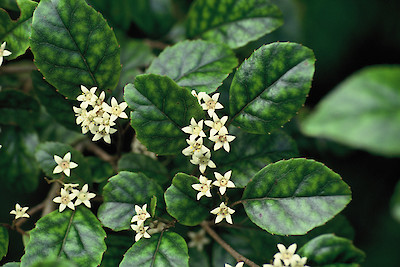
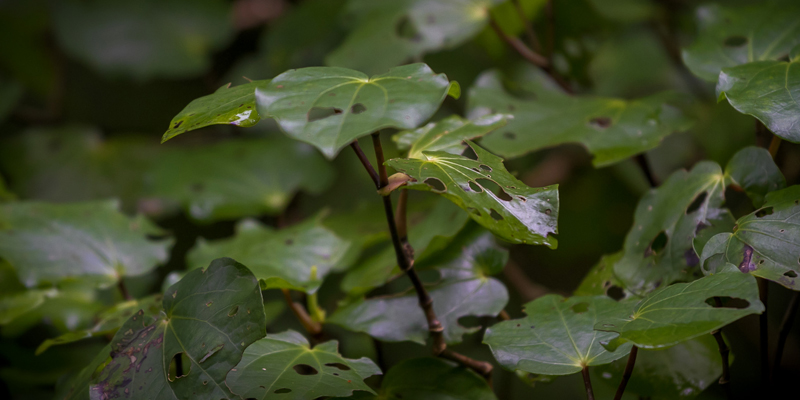
Putaputaweta, is also known as marble leaf because of its mottled leaves. The tree has a distinct juvenile phase with smaller leaves on zig-zagging branchlets.
Click on the tabs below for more information.
Description
Putaputaweta is often associated with damp places such a river sides, but it can sometimes be seen in sunny places too!
It has different juvenile and adult forms. Enjoy both!
Seed Collection
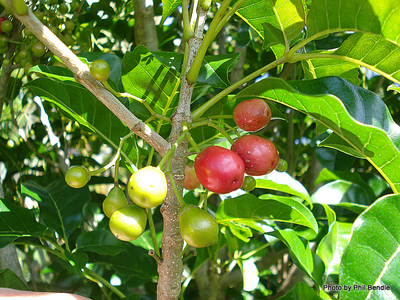
Gather ripe fruit from beneath trees, or pick ripe fruit from the trees. Fruit that have turned black are OK. Seeds that have dried out are probably not viable, but seeds on the ground that have remained damp probably are.
Soak seeds for a day to soften the flesh then scrape off the flesh, revealing a hard woody core. This contains up to four seeds, and anything from zero to four plants can germinate.
Germination
Press the fruits or seeds into a firm flat bed of seed raising mix and only lightly cover with either more mix or fine pumice. Seed sown in late summer generally germinates the following spring.
Growing On
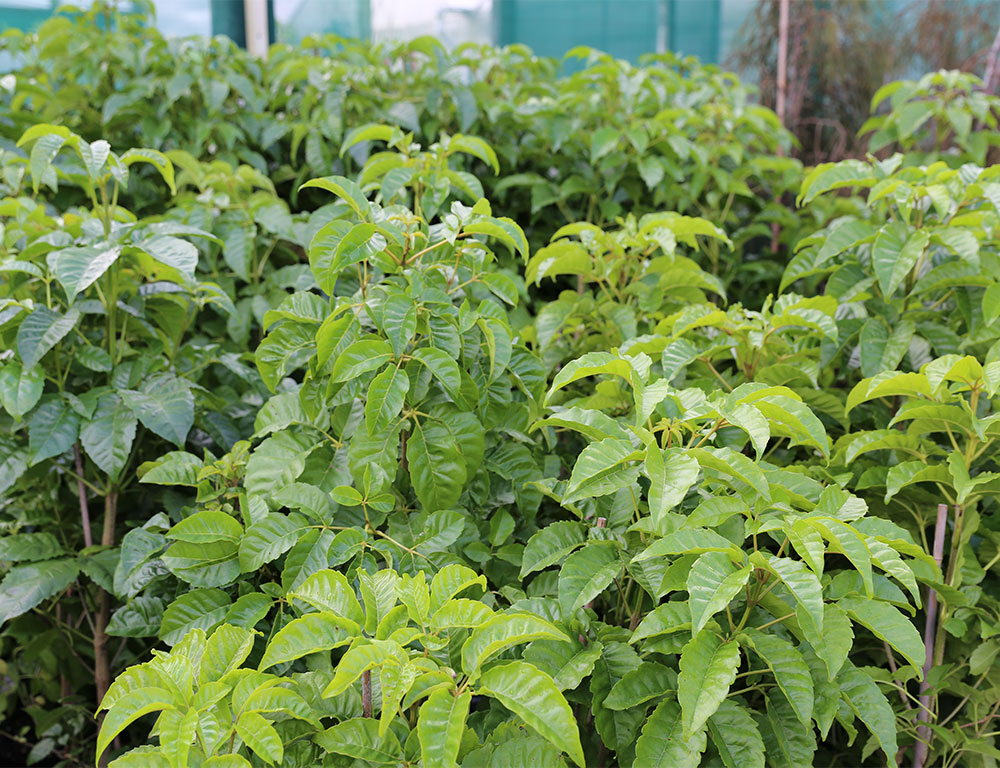
Prick out the seedlings when they have about four real leaves. Place into a small pot, bag or tube with a potting mix that contains compost. A PB3/4 bag is a good choice.
As the seedling grows, transfer to a larger pots or bag. A PB3 bag is a good choice.
Planting
Thrives in rich soil that is moist, yet free draining – dislikes wet feet. Plant in full sun to part shade. Frost tender when young.
Young trees can be frost tender and should not be planted outside their natural range.
Puriri seedlings are shade-tolerant, so the species is capable of regenerating beneath existing tall forest (in the wild), and other shaded places.
External Links
Check out these external links for further information:
Please share your experiences or questions about growing this plant, in the commenst section below. Comments will appear after a delay, to prevent spam.
Leave a Reply